

Date:8 May 2025
Content Sections
- ● The myth of “healthier” frying
- ● High-temperature cooking: hidden health risks
- ● A false sense of security
- ● Better ways to cook for health
- ● Take home
By Rob Verkerk PhD and Melissa Smith
Air fryers have become all the rage—and, more than that, social media influencers are often touting them as an appliance that creates healthy foods. In this piece we’re going to challenge that notion based on empirical evidence of how air fryers work along with some recent studies.
With sleek marketing that promises crispy, delicious meals using little to no oil, it’s no surprise that consumers see them as a shortcut to better health. But what’s happened in reality is that its ‘healthy’ status comes almost entirely by comparison with deep frying, which is nearly always unhealthy, and the fad is further supported by a myth, that fats are bad. In fact, there is no robust scientific evidence to suggest low fat diets are healthier than moderate to high fat diets.
In this article we expose the more complicated reality that underlies the current air fryer craze —one that challenges the assumption that air fryers are the healthy addition to your kitchen they claim to be.
The myth of “healthier” frying
The core health claim surrounding air fryers is that they allow people to enjoy fried foods with far less oil, thereby reducing fat and calorie intake. While it’s true that air fryers can create a crispy texture similar to deep-fried foods with significantly less oil, this so-called benefit only matters if deep frying was already a regular part of your cooking routine. The rise of air fryers has sparked a notable trend: individuals who once wouldn’t have considered deep frying at home are now regularly using these countertop appliances. This widespread adoption extends to feeding air-fried foods to children, often accompanied by a perception of enhanced healthfulness.
If you’re already eating a healthy diet—and you’re mainly slow cooking, steaming, or lightly sautéing the foods you cook—you won’t be deep frying your meals on a regular basis, if ever. If you then decide to throw an air fryer into the mix, don’t expect to see any actual improvement in your dietary health. Most likely, expect the opposite, especially if you use your shiny new appliance regularly (if you want to know why, keep reading). An air fryer in the kitchen can also induce a false sense of nutritional virtue because it can encourage you to “healthify” foods that shouldn’t be eaten regularly in the first place, such as processed frozen snacks like cheese sticks, chicken nuggets and mini pizzas.
What’s more, being ‘added fat free’ isn’t the same as being ‘fat free’. Many of the foods that are commonly air fried already contain different kinds of fats, either naturally as part of the food, or as added fats in processed foods. Also many people do coat, often via an oil spray, fats on their air fried foods prior to cooking. It is the effect of high temperatures on these fats, as well as on proteins, carbs and sugars, or combinations thereof, that air frying aficionados often seem to be mute on—and which should be a cause for concern if the health value of the foods you make in your home is important to you.
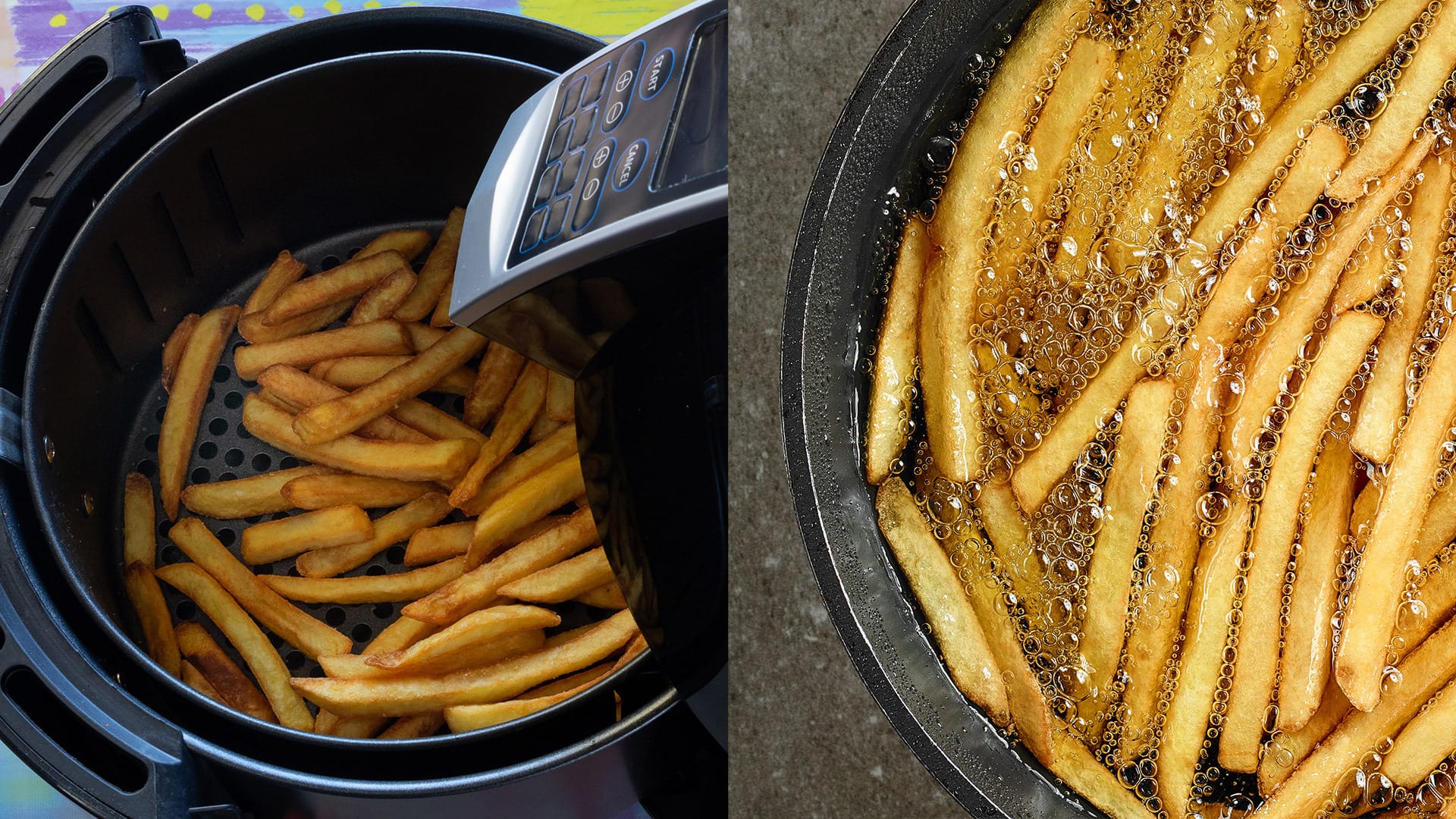
Available science says the French fries on the left are marginally healthier than those on the right—probably.
High-temperature cooking: hidden health risks
Often missing from all the hype about air fryers is how their reliance on high-temperature, dry heat to cook food—typically between 160°C to 220°C (320°F and 428°F)—as well as sometimes longer cooking times and the addition of oil or other fats, affects the production of potentially harmful, mutagenic or carcinogenic compounds.
There is some good news, however. There’s a growing body of evidence that shows that cooking with hot air reduces the amounts of a range of harmful substances compared with cooking in oil (e.g. deep frying, pan frying, grilling following brushing with oil). But some or all of that benefit can potentially be lost if exposures are increased should the air fryer become a dominant appliance in your kitchen. The bottom line is that high-heat cooking, especially when browning or charring occurs, while often rendering foods delicious, is also associated with the formation of specific harmful compounds:
- Acrylamide: Formed when starchy foods are cooked at high temperatures, acrylamide is classified, based primarily on evidence from animal studies, as a “probable human carcinogen” by the International Agency for Research on Cancer (IARC), while the US National Toxicology Program (NTP) classifies it as “reasonably anticipated to be a human carcinogen.” Foods that include potatoes and bread, both of which are commonly air fried, are prime sources of this chemical. Evidence suggests, however, that the amount of acrylamide formed during air frying is significantly less than when cooking with oil, especially deep frying; a Spanish study published in 2015 showing a 95% reduction.
- Heterocyclic Amines (HCAs): These are formed when amino acids, sugars, and creatine (found in muscle tissue) react at high temperatures. This occurs more readily when meat is cooked to a well-done state, and greater amounts form when temperatures are highest and cooking times are extended. The IARC has classified four common HCAs (IQ, MeIQ, MeIQx, and PhIP) as either “probable” or “possible human carcinogens”. The good news is a comprehensive study of different cooking methods found that air frying resulted in the lowest contents of 11 HCAs compared to pan frying (which yielded the highest levels of HCAs), cooking in an electric oven, and infrared cooking, regardless of meat type.
- Polycyclic Aromatic Hydrocarbons (PAHs): These are generated when fat and juices from meat drip onto the heat source, in this case the base or sides of the air fryer, causing smoke. These compounds can then deposit on the surface of the food. They can also form from the incomplete burning of organic materials. PAHs occur in complex mixtures but three common PAHs associated with barbequed, roasted or grilled meats, namely, benzo[a]pyrene, benz[a]anthracene and dibenz[a,h]anthracene, have been linked to an increased risk of certain cancers in animal studies and classified by the IARC as “probable human carcinogens”. While such studies were conducted before the advent of air fryers, they found that the closer the meat to the heat source, the longer it was cooked and the more charred the food, the greater the amounts of PAHs present on the outer surfaces of the meat. More good news, there is a growing body of evidence that air fryers that rely on hot air, rather than hot oil to cook foods, produce substantially lower levels of the key PAHs. For example, a detailed Chinese study comparing the levels of benzo[a]pyrene (BaP) when beef patties were cooked in an air fryer versus an oven (with or without brushing with oil), showed that air frying, without oil brushing, substantially reduced the amounts of BaP detected, often below the regulatory limit set in China (GB2762-2022) and the European Union (EU regulation 2020/1255) of 5 μg/kg. However, once brushed with oil, the beef patties yielded similar amounts of BaP compared with oven cooking, and reducing cooking time in the air fryer from 19 minutes to 9 minutes yielded no reduction in the amount of BaP formed.
- Advanced Glycation End Products (AGEs): These compounds form when proteins or fats combine with sugars in the bloodstream or during high-heat cooking. AGEs contribute to oxidative stress and inflammation, both of which are associated with chronic diseases such as diabetes, heart disease, and Alzheimer’s. A Chinese study evaluating the effects of deep frying, air frying, pan frying and baking of fish cakes found that significantly fewer AGEs were formed on the outside of the cakes with air frying compared with deep frying, the amounts being comparable with pan frying, but more than with oven baking.
Then you’ve also got the possibility of chemicals being emitted by the non-stick coatings in the air fryer itself. Some air fryers use Teflon® non-stick coatings, which contains per and polyfluoroalkyl substances (PFAS). These are released from coated surfaces at high temperatures, they are absorbed into foods, and when consumed they accumulate in the body. They’ve been associated with a wide range of adverse health effects from certain cancers, liver and thyroid problems, immune system disruption, through to reproductive issues.
Thus, while air fryers reduce oil use, they don’t eliminate the risks posed by high-temperature cooking, and these risks increase when oil is sprayed or brushed on the food, not because of the oil content itself, but through the oil’s effect in enhancing the production of harmful compounds associated with high-temperature cooking. In some cases, the very features that make air fryers appealing—the browning, the crispiness, the char—are exactly what increase the formation of these harmful compounds.
A false sense of security
Perhaps one of the most insidious effects of the air fryer ‘health halo’ is the false sense of dietary improvement it provides. When people use air fryers to cook foods like frozen chicken nuggets, French fries, or processed snack foods, they may feel justified in eating them more frequently simply because they used “less oil.” But these foods are still high in sodium, preservatives, and refined carbohydrates, none of which are made healthier by air frying.
Moreover, relying on an air fryer may discourage the adoption of truly healthy cooking habits. Instead of embracing whole, fresh foods and gentle cooking techniques, people may double down on convenience and highly processed ingredients simply because they’re “air-fried.”
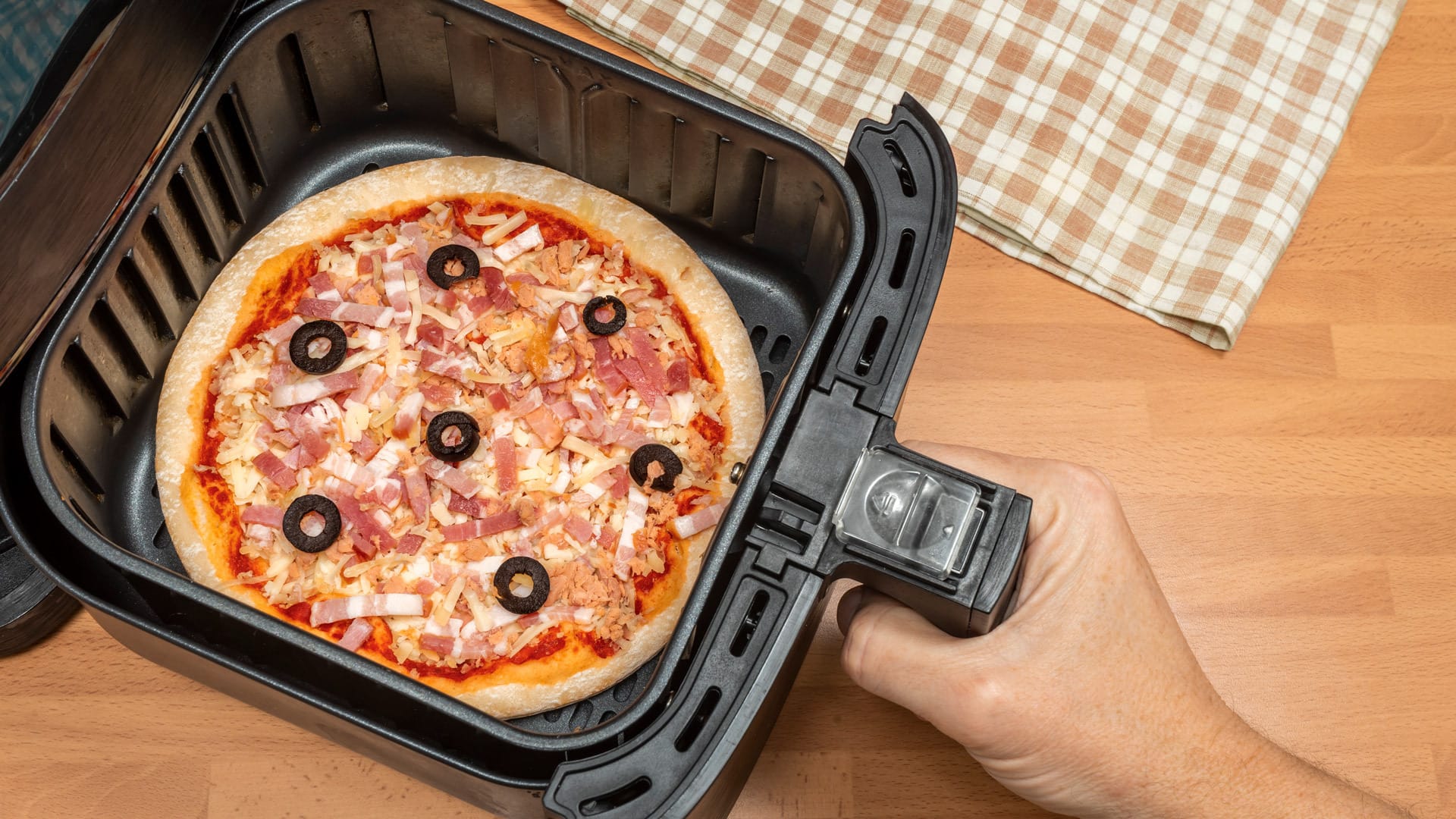
You can’t magically make this healthy by cooking it in an air fryer!
Better ways to cook for health
Rather than looking for a gadget to transform unhealthy foods into something acceptable, it’s more beneficial to embrace cooking methods that promote long-term health without relying on high temperatures, oil sprays, processed frozen foods, or misleading shortcuts.
Here are a few approaches:
- Steaming: One of the healthiest ways to cook vegetables and fish, steaming preserves nutrients and doesn’t require any added fat. It also avoids the harmful by-products of browning.
- Slow cooking: Using a slow cooker allows food to cook at low temperatures over long periods, minimizing the formation of acrylamide and other harmful compounds. It’s ideal for soups, stews, legumes, and lean meats.
- Poaching: This gentle cooking method, where food is simmered in water, broth, or milk at low heat, is perfect for eggs, poultry, and fish. It retains moisture and flavor without added fat or harmful heat.
- Sautéing in healthy fats: Cooking with moderate heat using healthy fats such as extra virgin olive oil or avocado oil can be both delicious and nutritious. These fats offer anti-inflammatory benefits and help absorb fat-soluble vitamins in vegetables.
- Roasting at low to moderate temperatures: While roasting can also create some high-heat by-products, keeping temperatures below 180oC (~360oF) and avoiding charring can limit harmful compounds. Pairing this with antioxidant-rich herbs and spices can further mitigate risks.
Take home
Air fryers may have a place in transitional diets—for people moving away from deep-fried fast food, for instance. But they are not a long-term solution for natural health. They risk reinforcing the processed food culture they claim to oppose, and they come with chemical, safety, and health compromises that deserve more scrutiny.
Air fryers may reduce oil consumption, but they don’t magically make unhealthy food healthy. More importantly, if you baste your air fried foods in fats prior to cooking, they carry many of the same high-temperature cooking risks as other methods associated with the production of carcinogens and pro-inflammatory compounds. For those already eating a balanced diet, adding an air fryer would seem to offer no benefit—and for others, it might promote more processed food consumption under a false sense of healthfulness. For those who are already in possession of an air fryer, perhaps the most important advice we can offer is: don’t use it routinely and don’t pre-treat your food with fats. The evidence is clear that air fryers are a healthier alternative to deep frying, but deep frying along with barbequing are well known as the least healthy cooking methods out there! A good adage to keep you eating healthy is the 95/5 rule, a health-conscious variant of the 80/20 rule.
Instead of relying on the latest kitchen fad, lasting health and resilience is best achieved by returning to cooking methods that emphasize diversity, largely unprocessed whole foods, healthy fats, high quality protein sources, and lower temperatures. The path to wellness is not through mimicking deep-fried textures—it’s through reshaping how we think about food from the ground up.
Let’s stop chasing “healthier” versions of unhealthy habits. Instead, let’s reclaim cooking as a sacred, nourishing act—one that doesn’t rely on plastic-coated gadgets but on real food, real fire, and real connection.
Choose natural. Choose real. Choose slow. Choose wise.
– – – // – – –
Please share this article widely among your network.
>>> If you’re not already signed up for the ANH International weekly newsletter, sign up for free now using the SUBSCRIBE button at the top of our website – or better still – become a Pathfinder member and join the ANH-Intl tribe to enjoy benefits unique to our members.
>> Feel free to republish – just follow our Alliance for Natural Health International Re-publishing Guidelines
>>> Return to ANH International homepage
