Date:15 January 2026
Seções de conteúdo
- ● Introdução
- ● The social, economic and lifestyle drivers of caffeine addiction
- ● The impact of chronic stimulation on mental, sleep and heart health
- ● The policy blind spot and the failure to protect consumers
- ● Conclusão
by Chimnonso Onyekwelu
Introdução
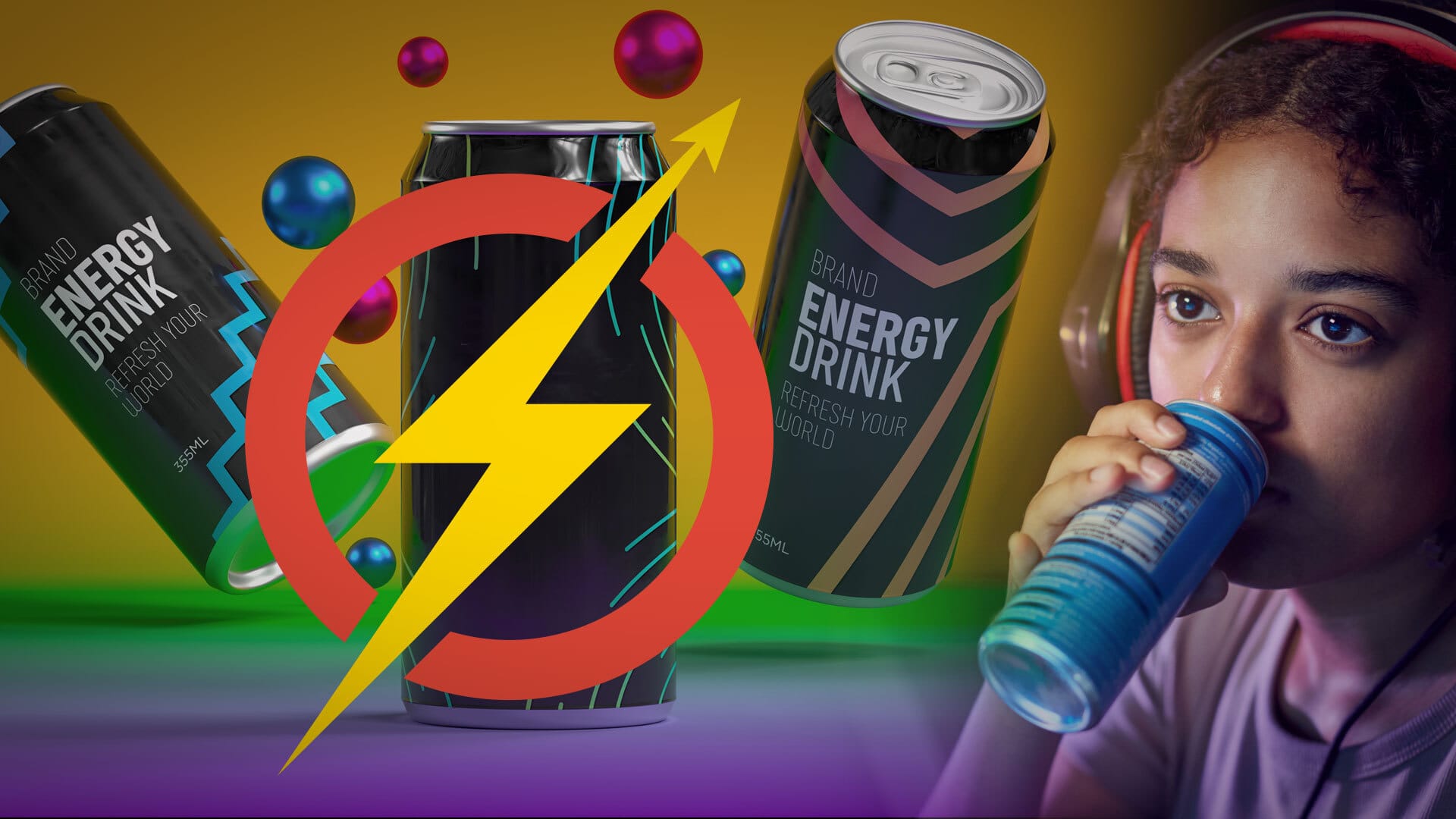
Energy drinks have quietly become one of the most serious — and least regulated — threats to children’s health. What began with the launch of Red Bull in the mid-1990s has spiralled into a global industry flooding shelves with hundreds of products, many packing between 50mg and an eye-watering 700mg of caffeine per serving. Today, nearly one-third (32%) of UK children consume energy drinks at least weekly, while in the US they are now the second most commonly used “dietary supplement” among young people, with almost 30% of high-school students reporting regular use.
There is no clearly defined safe caffeine limit for children in either the UK or the US, yet many energy drinks approach — or exceed — the adult daily recommendation of 400mg in a single can. Popular brands such as Monster, Bang Energy and Dragon Energy routinely contain over 300mg, with Rockstar XDurance in the US reaching the full 400mg. Add to this heavy sugar loads, zero nutritional value and marketing strategies designed to appeal directly to young people, and the risks escalate rapidly.
The health consequences are now impossible to dismiss. Research consistently links energy drink use with poor sleep, impaired academic performance, dental erosion, severe anxiety, ADHD-type symptoms, insulin resistance, depression, increased suicide risk, and higher rates of smoking, alcohol use, binge drinking and other risk-taking behaviours. Yet government action remains weak, even as the industry surges — valued at $79.39 billion in 2024 and projected to reach $125.11 billion by 2030.
Against this backdrop, we look at the rapid rise of energy drink consumption among children and young adults, the forces driving it, the growing evidence of harm to health, sleep and behaviour, the policy failures leaving young people unprotected, and practical, healthier alternatives to reduce dependence.
The social, economic and lifestyle drivers of caffeine addiction
Energy drinks are non-alcoholic beverages loaded with caffeine and sugar, often with added natural stimulants like taurine, guarana, and ginseng, designed to boost alertness and performance. Caffeine is a potent stimulant that keeps the brain switched on by suppressing normal signals of tiredness—a mechanism that can be especially problematic for children.
Young people are drawn to these drinks for different reasons, including the perception that they make them feel or look “cool.” A 2015 study reported motivations such as taste (50.2%), mixing with alcohol (19.3%), staying awake (11%), and curiosity (5.3%), while a 2007 study found 67% used them to combat sleep deprivation and 65% to give added energy. Studies (here and here) also show consumption rises when parents or peers use energy drinks. Likewise, many adolescents turn to them during exams, workouts, or night-time social events.
A major driver, often overlooked, is the aggressive marketing style of the energy drink industry. Companies target children, young people and athletes across gaming platforms, social media, sport branding, and in supermarkets where their products are strategically positioned in drink aisles. Last year alone, Red Bull was reported to have spent 25-30% of its revenue (around €3 billion) on extreme sports, lifestyle imagery rather than traditional advertising.
Combined with the normalisation of multiple daily stimulants—from fizzy drinks and coffees to pre-workout powders and caffeine gums—children are now routinely exceeding caffeine limits and becoming increasingly dependent on stimulants just to function through a typical day.
The impact of chronic stimulation on mental, sleep and heart health
While caffeine can offer brief benefits, such as short-term alertness, improved motor activity and a temporary boost in physical performance, these effects are fleeting and ultimately overshadowed by the risks. In children, whose brains and bodies are still developing, even low doses can amplify emotional sensitivity and disrupt the central nervous system (research here). The high sugar load in EDs only compounds the problem, contributing to weight gain, dental erosion and metabolic strain—outcomes consistently shown to harm children’s health.
The mental health risks for young people are particularly concerning. A 2025 study found that for every additional 100 mg of caffeine, depressive symptoms increased by 15%, and those in the highest quartile had an 85% higher likelihood of depression compared to the lowest. Studies (here, here and here) also link ED consumption to anxiety, irritability, aggression, hyperactivity and poor school performance. A UK dataset shows that children who consumed EDs five or more days a week had lower psychological, physical and educational well-being than non-drinkers. Evidence also associates ED intake with self-harm, substance misuse, smoking, binge drinking and injuries requiring medical attention.
Sleep, which is critical for growth, mood regulation and learning, is one of the first casualties of chronic caffeine use. Caffeine delays sleep onset, reduces sleep quality and shortens sleep duration, creating a vicious cycle where exhaustion drives more caffeine use, whereas more caffeine further disrupts sleep. This pattern is especially harmful during adolescence, a period that biologically demands more rest. Studies consistently show that caffeine worsens sleep disorders and contributes to morning fatigue, impaired academic performance and emotional instability.
The physical risks are equally alarming. Excessive intake can trigger caffeine intoxication, marked by headaches, restlessness, anxiety, rapid heartbeat and gastrointestinal issues. In one survey of over 2,000 young people, 24.7% reported fast heartbeats, 24.1% difficulty sleeping, 18.3% headaches, and 3.1% sought medical help. Energy drink consumers were more than twice as likely as coffee drinkers to experience adverse events.
With links to aggressive behaviour, risky sexual behaviour, drug use and violent conduct, it becomes clear: chronic stimulation is far from harmless, but a growing public-health concern that demands urgent protection for children and young people.
The policy blind spot and the failure to protect consumers
The absence of clear, enforceable policies on energy drinks has created a dangerous blind spot—one that directly shapes the choices, habits, and health of children and young people. In both the UK and the US, the regulatory frameworks fail to match the strength of the evidence. The US treats many energy drinks as dietary supplements under the DSHEA Act, meaning there is no official caffeine limit at all. In the UK, the same products sit in the category of ordinary beverages, where the only requirement for drinks exceeding 150 mg per litre is the familiar label: “High caffeine content. Not recommended for children or pregnant or breast-feeding women.” That warning is meant to protect, but in reality, it shifts responsibility entirely onto consumers, most of whom are young, impressionable, often unaware—and desirous of the caffeine hit!
This relaxed regulatory approach stands in stark contrast to the action taken in some other countries. Lithuania implemented a full ban on sales to under-18s in 2014, with Latvia, Poland, Romania, Hungary and Bulgaria following with their own restrictions. Kazakhstan, Turkey, Kuwait, Uzbekistan, and Honduras have each introduced some form of ban or sales restriction. Meanwhile, the UK’s bolder attempts have repeatedly stalled. The government first consulted on restricting sales in 2018, with 93% public support, and reiterated its intention in the 2019 Health Outcomes Green Paper. But since then, no further action was taken.
The renewed September 2025 UK consultation proposing a ban on selling drinks over 150 mg/L of caffeine to under-16s- is therefore not a fresh idea but a long-delayed one. This time, it must not be allowed to fade into another forgotten policy pledge under the weight of corporate lobbying. With evidence mounting, international precedents growing, and consumption continuing to climb, closing this regulatory blind spot is no longer optional. It is long overdue.
Conclusão
The rise of caffeine dependence in children is more than an energy-drink trend. It reflects a generation pushed into chronic stimulation while policymakers look away. Evidence shows these drinks disrupt sleep, heighten anxiety and depression, strain the heart, disrupt the metabolism, risk a lifetime of dental issues and normalise stimulant reliance during critical brain development. Yet the young people most affected are the least protected. Safeguarding them now demands more than labels. It requires decisive policy action, enforcement and honest education.
As awareness grows, many will need practical ways to reduce intake while keeping focus and energy steady. Below are healthier alternatives that help improve focus, stabilise mood, reduce fatigue and support resilience:
- Hydrate first thing: A glass of water on waking, before meals, and before and after physical activity supports steady energy and cognitive clarity.
- Nourish with protein and healthy complex carbs: Foods like live yogurt (dairy-free if sensitive), berries, nuts, eggs or a peanut-butter smoothie stabilise blood sugar and provide sustained fuel.
- Natural boosters: Beet juice, chia-seed water, lemon-and-salt water, or lightly brewed green or ginseng tea offer gentler, natural lifts.
- Support your micronutrients: Magnesium, B-vitamins and other minerals combat fatigue; consider a nutritional assessment if tiredness persists.
- Move regularly: Short walks in nature, stretching or exercise raise serotonin and endorphins, improving focus and mood.
- Taper gradually: Cut back slowly to avoid withdrawal and retrain the body into natural alertness. Increase water intake to counter the diuretic effect of caffeine and rehydrate the body. Water is crucial for delivering oxygen and nutrients, regulating body temperature, and removing waste. Dehydration leads to sluggishness tiredness and a host of other symptoms.
In the end, true energy comes from restoring resilience—not forcing the body into temporary alertness.
>>> Se ainda não está inscrito no boletim informativo semanal da ANH International, inscreva-se gratuitamente agora utilizando o botão SUBSCRIBE na parte superior do o nosso sítio Web - ou melhor ainda - torne-se membro do Pathfinder e junte-se à tribo ANH-Intl para usufruir de benefícios exclusivos dos nossos membros.
>> Não hesite em republicar - basta seguir a nossa Alliance for Natural Health International Diretrizes de republicação
>>> Regresso para a página inicial da ANH International
