Date:18 September 2025
Seções de conteúdo
- ● The rise of artificial breast milk
- ● Nature’s perfect start: Why natural breastmilk is irreplaceable
- ● Risks of artificial breast milk
- ● Why breastfeeding rates are declining
- ● The way forward
By Chimnonso Onyekwelu and Melissa Smith
Health authorities from the WHO to the NHS and the American Academy of Paediatrics agree: babies should be exclusively breastfed for the first six months of life. And for good reason. Breast milk is a living food, containing more than 1,500 bioactive molecules—lipids, proteins, immune cells and more—that adapt in real time to the baby’s changing needs. No lab-grown product, however advanced, can come close to replicating this evolutionary intelligence.
Yet breastfeeding rates remain shockingly low. In the UK, just 1% of babies are exclusively breastfed at six months. In the US, around a quarter meet that milestone. This decline isn’t accidental. It has been fuelled by decades of aggressive formula marketing that casts powdered milk as modern, scientific, even superior to breast milk (here and here). While research has long since debunked those claims, the industry’s cultural grip remains strong.
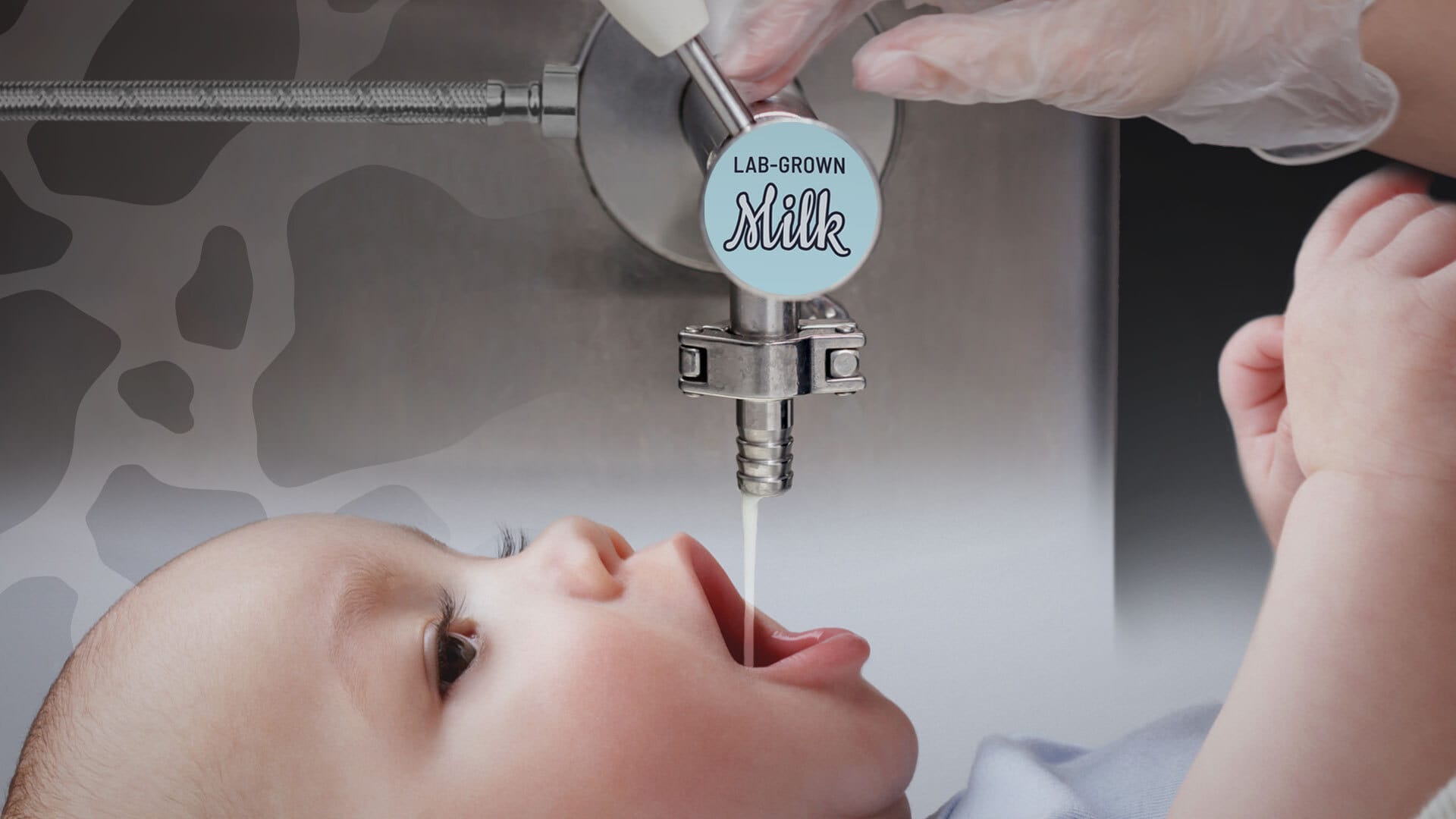
Now, amid the dominance of formula, a new ‘solution’ is emerging. Companies like Biomilq are promoting artificial breast milk as more “sophisticated” than nature itself. But history tells us that such promises come with risks. Research (here, here and here) links formula and breast milk substitutes to infections, allergies, obesity, diabetes and even leukaemia, while many products are loaded with added sugars such as lactose, fructose and glucose undermining claims of healthfulness. Meanwhile, the global infant formula industry continues to reap staggering profits, over $81 billion in 2024 alone, despite these dangers.
Against this backdrop, the arrival of lab-grown breast milk raises urgent questions: are we really advancing infant health, or simply entrenching corporate control over the first food we ever consume?

The rise of artificial breast milk
Artificial infant feeding dates back to 1867, when Justus von Liebig developed the first commercial formula, marketed as “virtually identical to mother’s milk.” Competition soon followed, with brands like Mellin’s, Ridge’s, and Nestlé flooding the market by the late 19th century. These early formulas, though fattening, lacked essential proteins, vitamins, and minerals, yet their popularity grew. By the 1950s and 60s, hospital endorsements and paediatrician promotion cemented formula as the mainstream alternative—despite its original purpose as an emergency option.
In 2020, the biotech start-up- Biomilq, announced efforts to create lab-grown breast milk containing casein and lactose. Just as with the rise of formulas, other start-ups like Remilk, Eden Brew and New Culture soon joined the race. By June 2021, Biomilq produced the first cell-cultured human milk from mammary cells grown outside the breast, celebrated as a potential alternative to formula, and as some argued, even to breastfeeding.
Although still in development, these companies promote their products as more “sophisticated” than human milk. This is unlikely, as natural breast milk adapts uniquely to the baby’s changing needs from hour to hour through the mother/baby infochemical network—something no artificial product could ever replicate.
Nature’s perfect start: Why natural breastmilk is irreplaceable
Breast milk is more than food — it is a living, dynamic substance designed to give infants the best start in life. Often called ‘liquid gold’, it delivers the precise balance of proteins, fats, and carbohydrates for growth, while carrying immune factors such as secretory Immunoglobulins, lymphocytes, cytokines, lactoferrin, and antimicrobial peptides. These natural defences protect infants from disease, seed the gut with beneficial bacteria, and strengthen immunity in ways no substitute can match (studies here and here).
The protective effects are well-documented. Studies (here and here) show that exclusive breastfeeding for six months reduces infant mortality and lowers the risk of common early-life illnesses such as ear infections. Other studies (here and here) reveal it prevents respiratory tract infections—a leading cause of child deaths worldwide—with benefits lasting into the early school years. Breastfeeding further lowers the risk of childhood obesity, a major predictor of adult obesity. The WHO’s European Childhood Obesity Surveillance Initiative (COSI) confirmed this, stating that obesity is more common among infants raised on formula compared to those exclusively breastfed. It also lowers the risk of future gut related diseases e.g. Crohn’s Disease and other inflammatory bowel conditions, as well as cancer.
Unlike formula, which is static, breast milk is constantly adapting. Its composition shifts across lactation—even feed by feed—to match the changing needs of the growing infant. Rich in prebiotics and oligosaccharides, it blocks pathogens from attaching in the gut, reducing diarrhoea, and respiratory illness. It also supports early colonisation of Bifidobacterium and Lactobacillus, microbes that boost immunity and lower allergies and autoimmune risks (studies here and here).
The benefits extend beyond infancy. Research (here, here and here) shows that breastfed children face lower risks of type 2 diabetes, asthma, and dental malocclusion (misalignment of teeth), along with modest but significant improvements in cognitive, motor, and visual development. For mothers, breastfeeding reduces the risk of breast and ovarian cancers while strengthening the biological and emotional bond with their infant. Put simply, while formulas and now, lab-grown milk, may claim similarity, no scientific innovation has ever matched the sophistication of human breast milk.
Risks of artificial breast milk
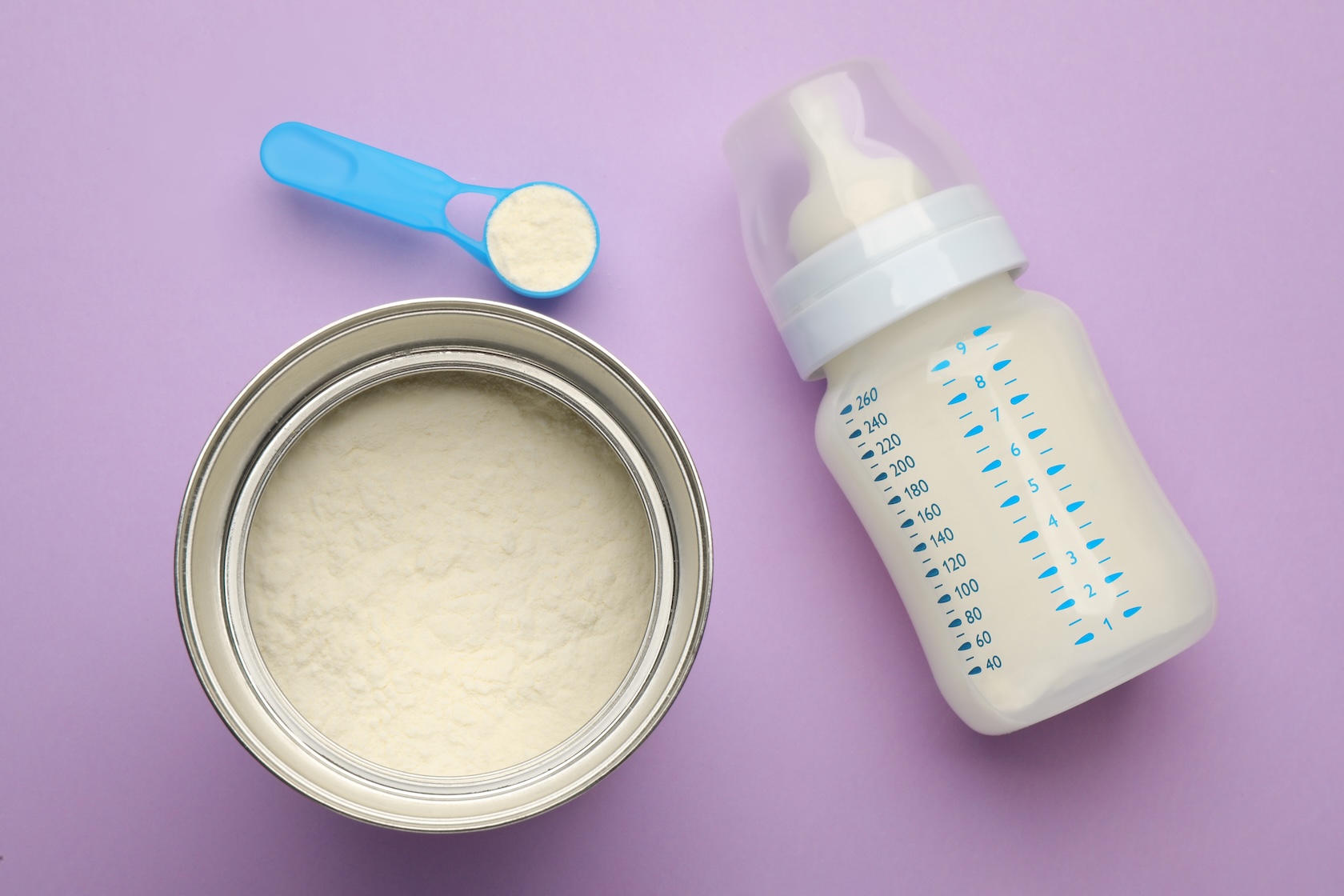
Infant formula is made through mixing, heat treatment, and spray-drying, while lab-grown breast milk is produced by cultivating mammary cells in bioreactors under artificial conditions. Though marketed as safe and innovative, both remain industrial products vulnerable to contamination during manufacturing, packaging, and storage. Unlike natural breast milk, which is sterile and self-protective, these substitutes depend on strict human and machine controls — and when those fail, infants pay the price.
To mimic human milk, manufacturers add iron, iodine, vitamins, and prebiotics to infant formulas, but these additions introduce their own risks. Studies (here, here and here) show that formula-fed infants receive over 20 times the iron in breast milk, aluminium levels up to 40 times higher, and excessive iodine linked to hypothyroidism. They are also more likely to ingest lead, cadmium, and cow’s milk proteins that trigger allergies in up to 7.5% of babies. Similarly, bottle feeding alters natural breathing patterns because the continuous flow of milk forces infants to swallow rapidly, disrupting airflow. Formula use also suppresses maternal prolactin, often reducing milk supply and creating dependency on these substitutes.
These dangers are not theoretical. In March 2025, US-based Consumer Reports tested 41 baby formulas and found that half contained harmful levels of arsenic, lead, BPA, acrylamide, or PFAS. Beyond the contamination issue, studies (here and here) confirm that formula lacks the bacterial diversity, immune factors, and adaptive qualities that make human milk uniquely protective. Fortification may add nutrients, but it cannot replicate breast milk’s living and protective properties.
Why breastfeeding rates are declining
The decline in breastfeeding rates stems from social, cultural, and economic pressures. Stigma still surrounds breastfeeding beyond six months, while formula is promoted as modern and convenient. Some women avoid breastfeeding for cosmetic reasons, such as fear of sagging breasts, while others are constrained by workplaces without maternity leave, lactation rooms, or supportive policies. Formula companies exploit these barriers, lobbying to weaken maternity protections, aggressively marketing in low-income countries, and sponsoring health or ‘educational’ programmes that normalise formula use. These strategies exploit vulnerable mothers and health workers, reinforcing the false belief that formula equals or surpasses breast milk.
A deeper cause also lies in lack of awareness and professional support. Many parents remain unaware of the hazards of artificial feeding because health professionals often downplay the differences between them and breast milk to avoid inducing guilt. This paternalism undermines informed consent. As Lawrence notes, “Parents have the right to hear the data. They can make their own choice. Fear of instilling guilt is a poor reason to deprive a mother of an informed choice.” While ‘formula shaming’ should be avoided when mothers cannot breastfeed for medical reasons, doctors should still encourage able mothers to nurse rather than stay silent and conceal the truth.
The way forward
Breastfeeding is not only nature’s perfect safeguard, but the most complete form of individualised infant nutrition—protecting babies from disease, fostering development, and supporting mothers’ health. To reverse declining rates, stronger breastfeeding education and support networks are needed, alongside tighter regulation of formula marketing. Governments and employers should be encouraged to extend paid maternity leave and create workplaces that truly support breastfeeding, while public campaigns should destigmatise and normalise nursing–even discreetly in public places.
Health workers should also move beyond neutrality: prenatal visits and childbirth classes are vital opportunities to provide clear, evidence-based information so parents can make informed choices. With the continued decline in breastfeeding and the upward surge of chronic diseases, promoting and protecting breastfeeding is not just a health intervention. It is a moral responsibility that promotes informed parental choices and secures a healthier future for children for generations to come.
>>> Se ainda não está inscrito no boletim informativo semanal da ANH International, inscreva-se gratuitamente agora utilizando o botão SUBSCRIBE na parte superior do o nosso sítio Web - ou melhor ainda - torne-se membro do Pathfinder e junte-se à tribo ANH-Intl para usufruir de benefícios exclusivos dos nossos membros.
>> Não hesite em republicar - basta seguir a nossa Alliance for Natural Health International Diretrizes de republicação
>>> Regresso para a página inicial da ANH International
